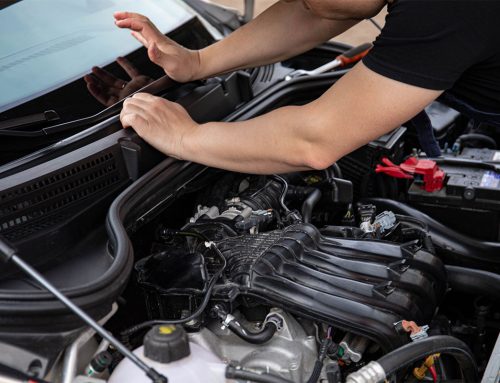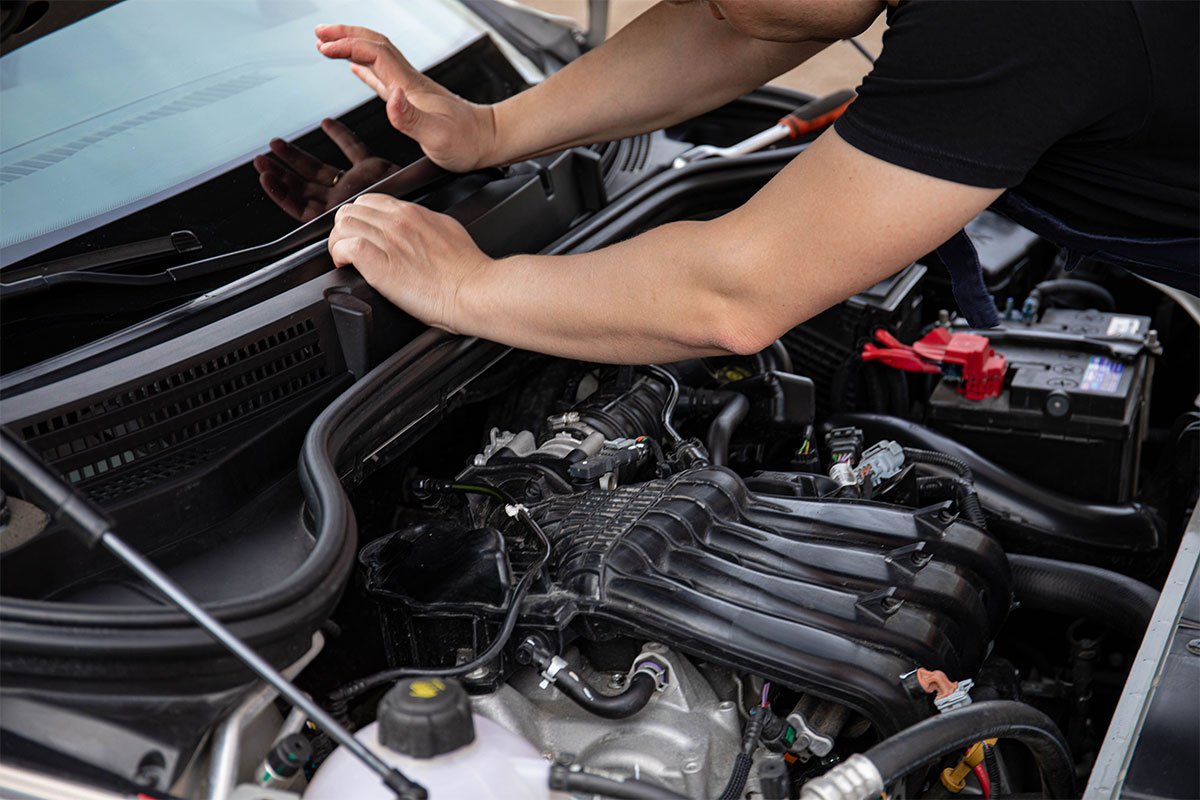
Wondering how to check car fluids safely? Start with the owner's manual. It tells you which reservoirs your vehicle has, how to read them and which fluid specifications apply. For many cars, you can check engine oil, coolant, brake fluid and windscreen washer fluid with a visual inspection. Transmission and power steering checks depend on the vehicle; some systems are sealed and have no owner-accessible dipstick.
These checks can help you notice a change between services. They do not replace scheduled servicing or diagnose the reason a level has fallen.
Before you open the bonnet
Park on level ground, apply the parking brake and switch the engine off. Keep hands, clothing and tools clear of fans, belts and other moving parts. Let hot components cool before reaching into the engine bay, and never remove a radiator or pressurised coolant cap while the engine is hot. Check your manual for any model-specific procedure, particularly the engine temperature and waiting time required for an accurate oil reading.
If a warning light is on, the car is overheating or there is a fresh puddle underneath, deal with that problem first. A fluid check is useful information, but topping up may conceal a leak or fault.
1. Check the engine oil
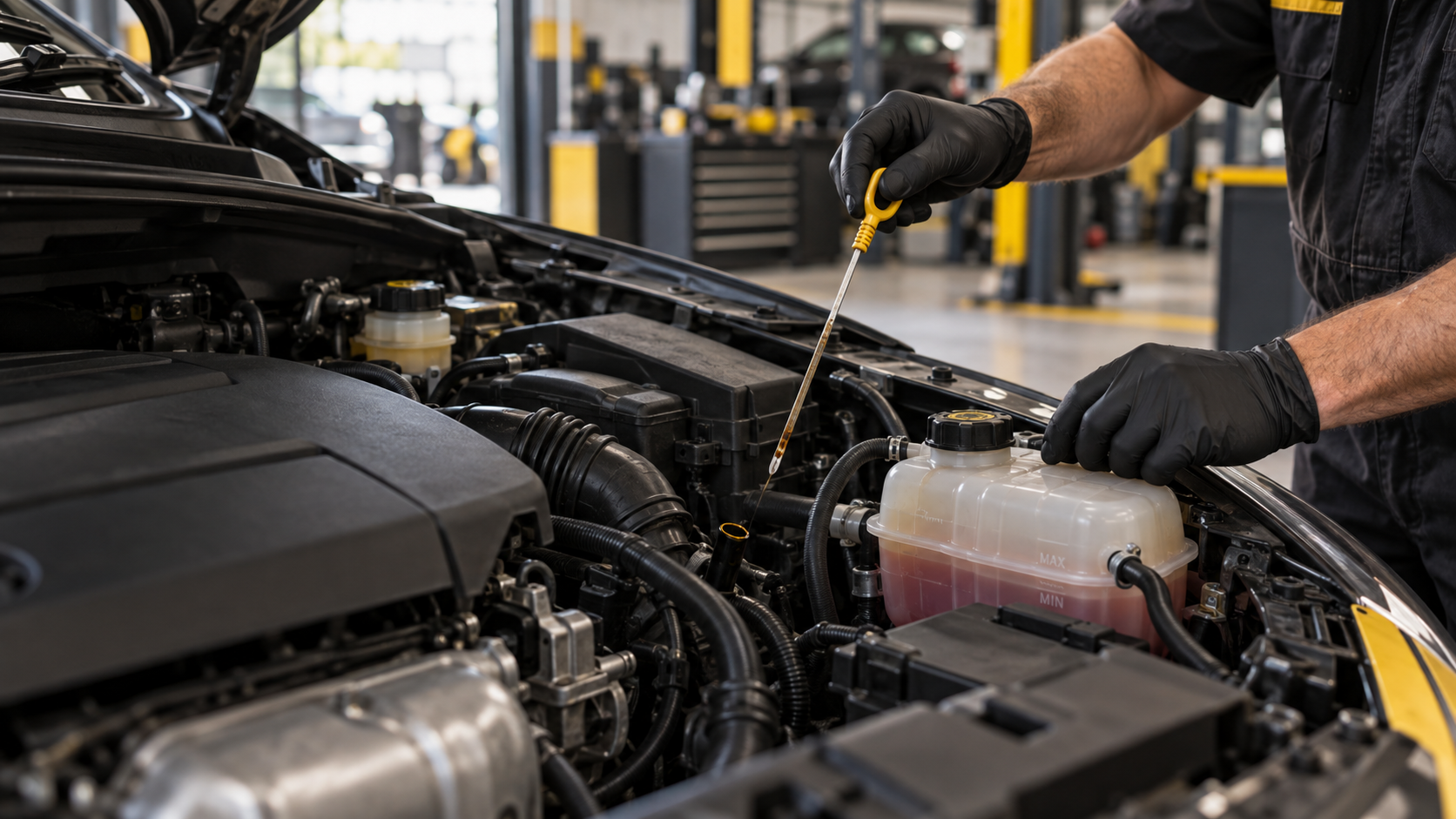
Your manual will show whether your car has a dipstick or an electronic oil-level display. For a dipstick check, follow the manufacturer's timing instructions after switching the engine off. Pull the dipstick out, wipe it clean, insert it fully, then remove it again to read the level against the marked range. If the oil is below the minimum, use only the oil grade specified for your vehicle and add it gradually, rechecking as the manual directs. Do not overfill.
An oil level that keeps dropping, an oil leak, an oil-pressure warning or unusual engine noise needs professional attention. If the oil-pressure warning appears while driving, stop safely and switch the engine off; continuing to drive can damage the engine.
2. Check the coolant level when the engine is cold
Find the translucent coolant expansion tank shown in your manual. With the engine cold, compare the visible level with the tank's cold MIN and MAX marks. You should not need to open the cap just to read it. Never open a hot coolant system: it can release scalding liquid and steam under pressure.
If the level is low, check the manual for the specified coolant rather than mixing products by colour. Coolant that repeatedly falls, looks contaminated or is accompanied by a rising temperature gauge needs an inspection. If the engine overheats, pull over safely and arrange help instead of driving on.
3. Look at the brake fluid reservoir
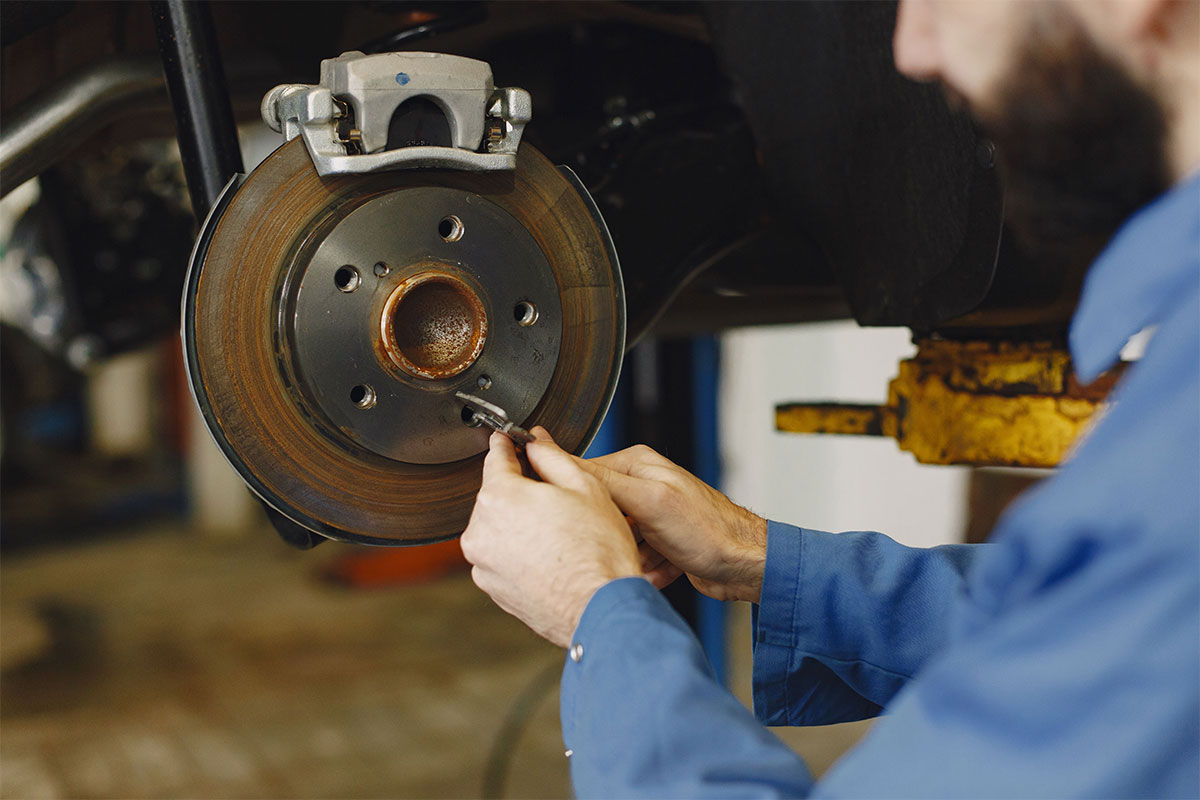
Many cars have a translucent brake fluid reservoir with MIN and MAX marks. You can usually check the level from outside the reservoir without opening it. A falling level may reflect brake-pad wear or a leak; the level alone cannot tell you which. Brake fluid also needs to meet the correct specification, so a routine top-up is not a substitute for finding the cause.
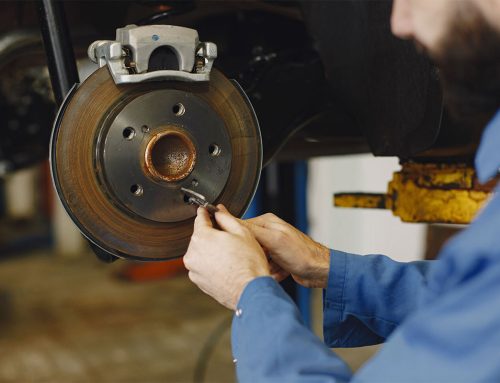
If the brake warning light stays on, the level is below minimum, the pedal feels soft or the car takes longer to stop, do not keep driving to test it. Arrange a brake inspection. Our brake repairs service includes brake system checks and brake fluid testing.
4. Check the windscreen washer fluid
Find the washer bottle using the cap symbol or your manual. Top it up with a washer product suitable for the vehicle and local conditions, following the product and manufacturer directions. Test that the washers spray and the wipers clear the glass. If the bottle empties again quickly or a jet does not spray, check for a leak or blocked nozzle.
5. Check other fluids only where your manual provides a procedure
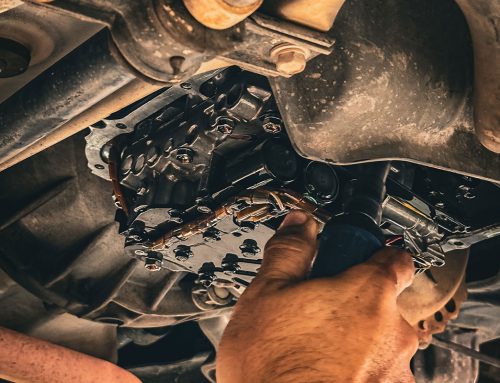
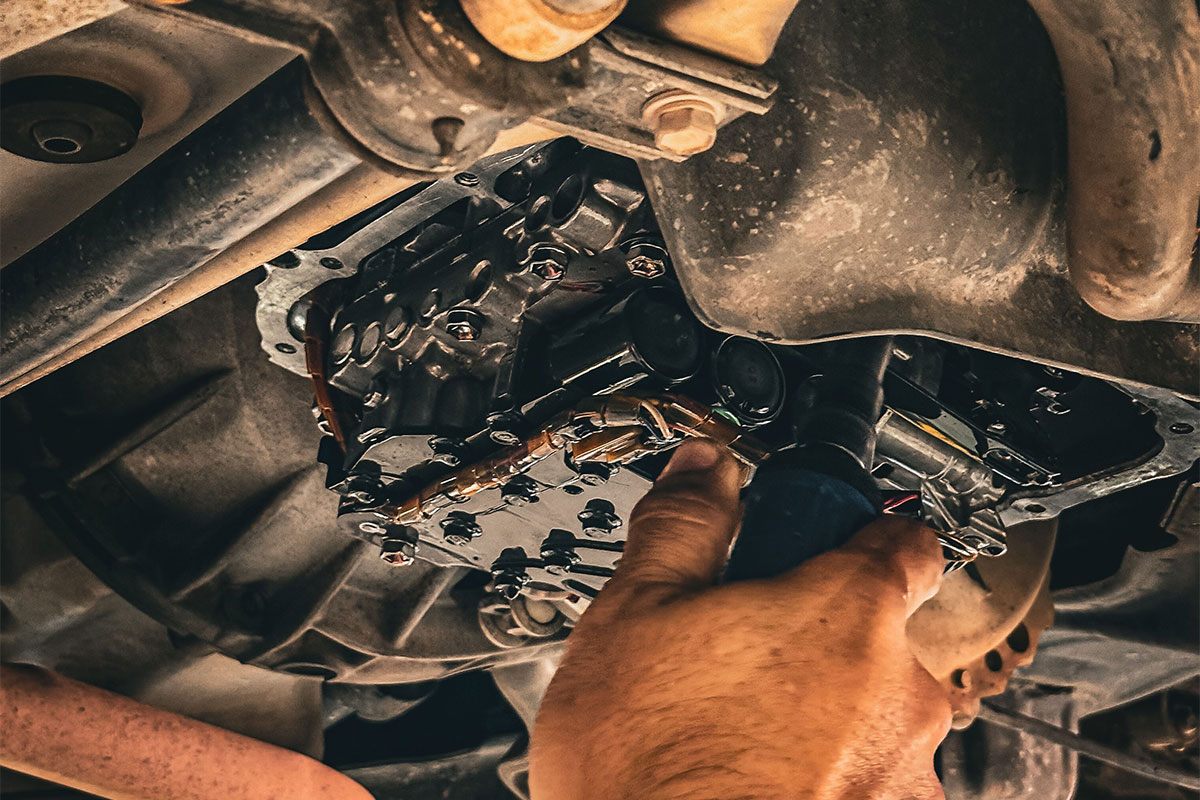
Some vehicles have a power steering reservoir or a transmission dipstick. Others use electric power steering or a sealed transmission with no simple owner check. Do not guess from the shape of a cap or pour fluid into an unfamiliar reservoir. If you notice a leak, difficult gear changes, heavy steering or a warning light, ask a workshop to identify the system and inspect it.
Common mistakes to avoid
- Checking oil on a slope or at the wrong time. Either can give you a misleading reading. Follow the manual's procedure on level ground.
- Opening a hot coolant cap. Check the marked expansion tank when cold and leave the pressurised cap alone.
- Mixing fluids or relying on colour. Oil, coolant, brake fluid and transmission fluid have vehicle-specific specifications.
- Repeatedly topping up a falling level. A leak or mechanical problem may be developing.
- Treating a low brake-fluid level as a routine refill. The brakes need an inspection to find the cause.
When to book a professional check
Book an inspection if a fluid level keeps falling, you see a fresh leak, a warning light stays on or the fluid looks contaminated. For brakes, overheating or an oil-pressure warning, stop driving safely and seek help promptly. If the levels look normal but the vehicle is due for maintenance, a proper service still checks fluid condition and the systems behind them.
Mobile Brakes is a workshop in Flinders Park serving Adelaide drivers. Our car service team can inspect fluid levels as part of routine servicing and explain any further work before it goes ahead. Contact the workshop with your vehicle's make, model and symptoms if you are unsure what to check next.
| Common Questions |
Frequently asked questions
How often should I check my car's fluids?
Use the interval in your owner's manual and check before a long trip. Check sooner if a warning light appears, you spot a leak or the vehicle behaves differently.
Can I tell whether brake fluid needs replacing by looking at the level?
No. The level does not show moisture content or overall condition. A workshop can inspect the brake system and test the fluid against the vehicle's service requirements.
Do electric cars have fluids to check?
They can. Depending on the model, an electric car may have brake fluid, coolant and washer fluid. Follow the owner's manual and do not open any high-voltage components.